What Excavating Actually Involves on a Southern Maryland Property (And Why It Is Not as Simple as Moving Dirt)
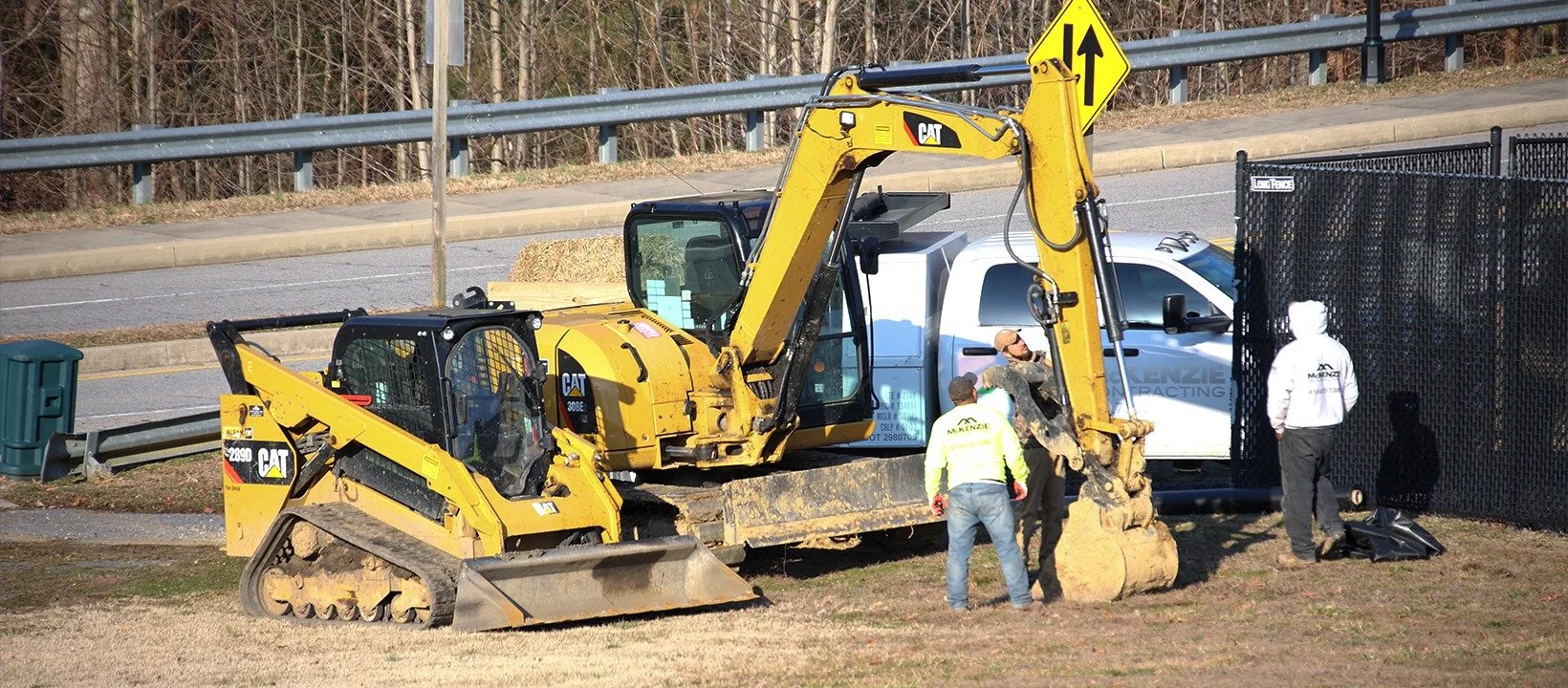
Excavating sounds straightforward. Dig a hole. Move the dirt. Grade the surface. But on most residential and commercial properties in Owings, MD, and across Southern Maryland, the work underneath the surface is where the real complexity lives. Buried utilities, variable soil conditions, drainage patterns, root systems, and proximity to waterways all affect how the excavation needs to be planned and executed. Skip any of those considerations, and the project that follows, whether it is a patio, a retaining wall, a driveway, or a drainage system, starts on a compromised foundation.
The ground is not just something you build on. It is the first thing you have to get right.
Related: Excavating & Deck Building in Lexington Park, MD: Streamline Your Outdoor Living Upgrade
Why Southern Maryland Land Adds Complexity
The soil across Calvert, Charles, and St. Mary's counties is not uniform. Some areas are heavy clay that holds water and expands when saturated. Others are sandy and shift under load. Many properties sit near the Chesapeake Bay or the Patuxent River, which means the water table is higher than inland sites, and environmental regulations govern what can be disturbed and how.
Excavating on this kind of land requires more than a machine and an operator. It requires an understanding of how the soil behaves when it is wet, how the grade directs water toward or away from the structure being built, and what the environmental constraints are before the first bucket drops. On properties within the critical area or near buffer zones, the rules around grading, clearing, and soil disturbance are specific and enforceable.
A contractor who understands sediment and erosion control, stormwater management, and Bay protection standards can plan the excavation around those requirements instead of discovering them mid-project.
Related: Patio Trends 2025: Landscape Design Ideas for Owings, MD, Residents
What a Proper Excavation Covers
Most homeowners think of excavating as a single task, but it typically involves several coordinated steps that set up everything that comes after:
Utility location and marking before any digging begins, because hitting a gas line, water main, or buried cable turns a construction project into an emergency
Site clearing to remove vegetation, stumps, roots, and debris from the work area so the excavation surface is clean and accessible
Cut and fill grading to establish the correct elevations for the structure being built, whether that is a level pad for a patio, a sloped surface for drainage, or a terraced grade for a retaining wall system
Soil management, including hauling excess material off site or redistributing it on the property to support the final grading plan
Compaction of the subgrade to create a stable base that will not settle unevenly under the weight of the hardscape, structure, or surface above it
Each of these steps affects the next. A pad that is not graded to the right elevation will not drain properly. A base that is not compacted will settle after the first season. Soil that is redistributed without accounting for how it interacts with the existing grade can redirect water in ways that create new problems.
The Work Nobody Sees
The best excavation work is invisible once the project is finished. The patio sits level. The retaining wall holds. The drainage flows where it should.
Nobody thinks about what happened underneath, and that is exactly the point.