How to Know When a Tree Has Become a Liability and What Tree Removal Involves in Owings, MD
Nobody wants to take a tree down. Trees add value, shade, beauty, and ecological benefit to a property. But there are situations where the tree is no longer an asset. It is a hazard. And the cost of leaving it standing exceeds the cost of removing it, measured not in dollars but in the risk to the house, the family, the driveway, and anything else in the fall zone.
Tree removal is the solution when the tree has reached a point where preservation is no longer responsible. And in Southern Maryland, where mature hardwoods grow tall, storm systems deliver high winds, and root systems interact with foundations, septic fields, and underground utilities, the decision and the execution both deserve serious attention.
Related: Tree Removal Owings, MD: Safe, Strategic Solutions for Mature and Damaged Trees
When Tree Removal Is the Right Call
Not every declining tree needs to come down. Some can be pruned, cabled, or treated. But there are conditions that move a tree from the treatable category into the removal category.
The situations that typically warrant tree removal include:
Structural failure in the trunk, including deep cracks, cavities, or fungal fruiting bodies that indicate internal decay beyond the point of recovery
A significant lean that has developed or worsened over time, particularly if the lean is toward a structure, a driveway, or an area where people spend time
Root damage from construction, grading, or utility work that has compromised the tree's stability or its ability to sustain itself
Storm damage that has removed major limbs, split the crown, or twisted the trunk in a way that leaves the tree structurally compromised
Proximity to structures where the root system is damaging the foundation, the sewer line, or the septic system, and root management is not a viable alternative
Dead or dying trees that have lost their canopy, dropped bark, and become host to wood boring insects that may spread to healthy trees nearby
Each of these situations carries a level of urgency. A tree with active structural failure near a house is a near term risk. A slow decline in a tree at the back of the property may allow time for planning. The assessment determines the timeline.
Related: 6 Signs You Need Professional Tree Removal in Crofton, MD
What the Removal Process Involves
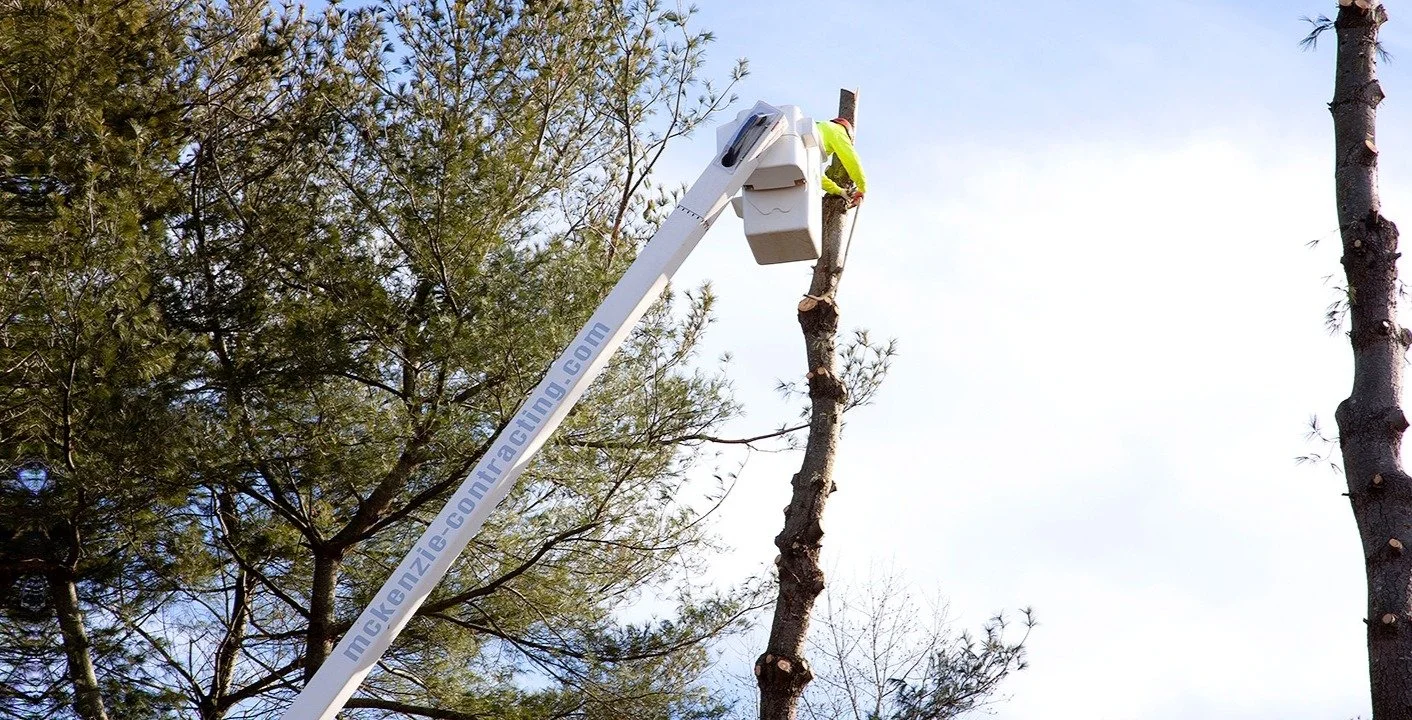
Tree removal on residential properties in wooded areas of Southern Maryland is not chainsaw work alone. It is site management. The tree may be surrounded by other trees, structures, fences, utility lines, or landscape features that constrain the fall zone and require sectional dismantling from the top down rather than a straight fell.
The process typically includes the assessment of the site and the identification of any obstacles, the removal of the tree in sections using rigging and climbing or equipment depending on access, the processing of the wood and brush, stump grinding if requested, and the restoration of the surrounding area including any turf, bed, or grade disruption the removal caused.
Equipment access matters. A tree in the backyard with no gate wide enough for a loader requires a different approach than a tree in the front with open access. The company handling the removal should evaluate access during the estimate, not discover it on the day of the work.
The Decision That Protects Everything Around It
Removing a tree is not a loss. It is a decision that protects the structures, the landscape, and the people on the property from a risk that only grows with time. If a tree on your property in Owings or the surrounding area has been raising concerns, an assessment from a team with the equipment and the experience to handle the work safely is the responsible next step.