Forestry Mulching Services in Owings, MD: What It Handles and What It Leaves Behind
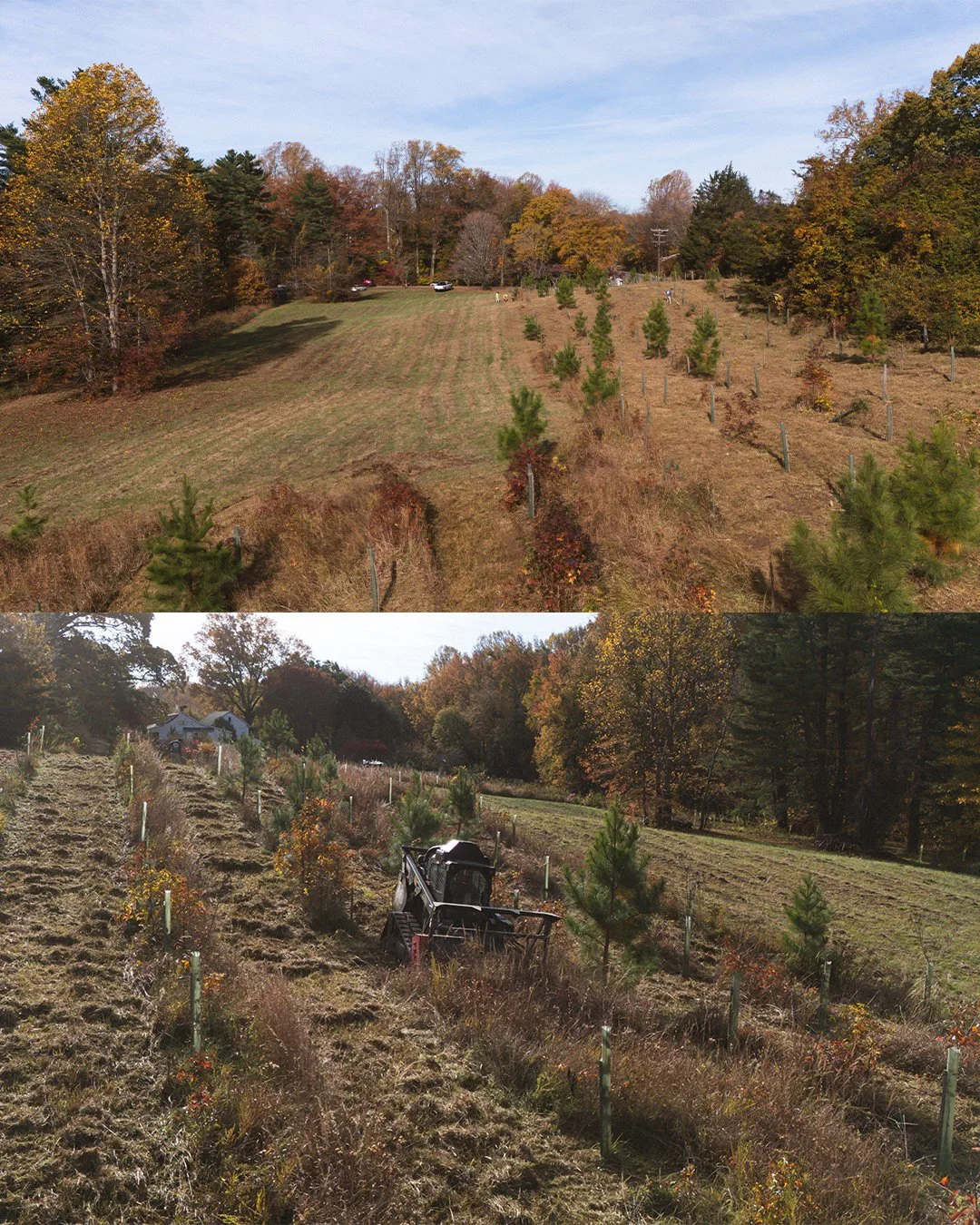
Property owners asking about forestry mulching services in Owings, MD have usually walked a back section of their land and given up halfway. The useful thing to understand before booking is what the machine does and what it deliberately leaves in place, because that distinction decides whether mulching finishes your project or starts it.
McKenzie Contracting serves homeowners, HOAs and commercial clients across Maryland, with a strong focus on areas south and east of the D.C. Beltway. Our crews handle forestry mulching alongside excavation, grading and drainage, so we see every week how clearing shapes the work that follows it.
Forestry mulching removes dense growth at ground level and turns brush and small trees into mulch that stays on site. Here is what that means on an actual Southern Maryland parcel.
Related: Forestry Mulching: A Smarter Way to Clear Overgrown Land in Southern Maryland
What Does Forestry Mulching Remove From a Property?
Forestry mulching removes understory growth and small-diameter stems and processes them in place. Brush, briars, vine tangles, saplings and the scrub that fills a neglected treeline go through the mulching head and come out as mulch spread across the ground.
The work we handle under this heading covers brush clearing, vegetation removal, wooded lot cleanup, access clearing and selective clearing.
Selective clearing is the version where specific trees stay and everything competing with them goes, which suits owners who want a woodland opened up rather than erased.
What Stays in the Ground After Forestry Mulching?
Roots and stumps stay in the ground after forestry mulching, and that detail surprises most owners. A mulched lot looks cleared, yet below the surface it is still a root mass.
For a trail, a hunting lane, a fire break or a view corridor, that is exactly right, since the root structure holds the soil and the ground stays stable.
For anything you intend to build on, grade or pave, the stumps and roots have to come out separately.
Is Forestry Mulching the Same as Land Clearing?
Forestry mulching is one method of land clearing, suited to particular outcomes. Clearing a building pad means removing material from the site, which involves different equipment and a place for the debris to go. Mulching keeps the material where it fell and converts it.
One question settles which approach your parcel needs: do you want the ground usable, or do you want it buildable?
Usable ground is a mulching job. Buildable ground calls for stump and root removal, and often grading, after the surface growth is gone.
Related: How to Know When a Tree Has Become a Liability and What Tree Removal Involves in Owings, MD
How Does Forestry Mulching Fit Ahead of Excavation or a Build?
Forestry mulching goes first, because surveyors, excavators and designers all work better on ground they can see. Clearing the surface growth reveals the grade, the low spots and the drainage paths that brush had been hiding.
Our forestry mulching sits inside the same excavation and site work division as grading, drainage and tree removal.
That lets the sequence be planned as one project rather than three contractors arriving in an order nobody coordinated.
What Should a Property Owner Expect at a Forestry Mulching Site Walk?
A forestry mulching site walk focuses on what you intend to do with the land more than on acreage. We ask where you want to be able to walk or drive, which trees are staying, and where the property pins, septic field, well head and any buried utility runs sit.
We also look for wet ground that equipment should keep off in the spring. Those answers shape the scope, and they are far easier to give standing on the land than over the phone.
Book Forestry Mulching in Owings, MD With a Plan for What Comes Next
Clearing goes better when the next step is already decided. We provide forestry mulching services across Owings, Calvert County and Southern Maryland, alongside the excavating, grading and drainage work that often follows.
To walk the parcel and scope the clearing, reach out to McKenzie Contracting.
In Summary
How long does forestry mulching take on a typical Southern Maryland parcel?
Forestry mulching time depends on how dense the growth is and how much of it is woody rather than soft. Light brush moves quickly, while a parcel thick with mature understory and vine growth takes considerably longer per acre. McKenzie Contracting gives a realistic duration after walking the ground rather than from an acreage figure alone.
Does the mulch left on the ground need removing?
The mulch layer generally stays in place, and leaving it is part of the benefit. It suppresses regrowth for a period, holds soil on a slope and breaks down into the ground over time. Where a site is heading straight into construction, the layer gets handled during the grading stage instead.
Will the cleared growth come back after forestry mulching?
Some regrowth returns after forestry mulching because the roots are still in the ground. How quickly depends on the species and the season. Many owners treat mulching as maintenance on a cycle for trails and view corridors, and move to full removal only where the ground has to be permanently clear.